
The breed is the result of the long-established tradition of shepherding and protecting flocks in the harsh Anatolian region from predators and thieves and has thus developed strong stamina and wild instincts.
The Anatolian Shepherd Dogs are very confident with their families but at the same time they are very suspicious of strangers and only with the help of careful training and socialization by a knowledgeable owner, can they be tamed.
About the Anatolian Shepherd Dog
The Anatolian Shepherd Dog is an ancient Turkish livestock guardian breed that has been protecting for more than 6,000 years. These massive, yet nimble and independent dogs epitomize the perfect combination of being tough with the gentleness of a family protector and the loyalty of a seasoned owner’s working companion.
Breed Sound
Breed Details
Physical Characteristics
Anatolian Shepherd Dogs are of a strong and sturdy build, which is upright and durable, characteristics that are indicative of their long lifespan and guarding nature.
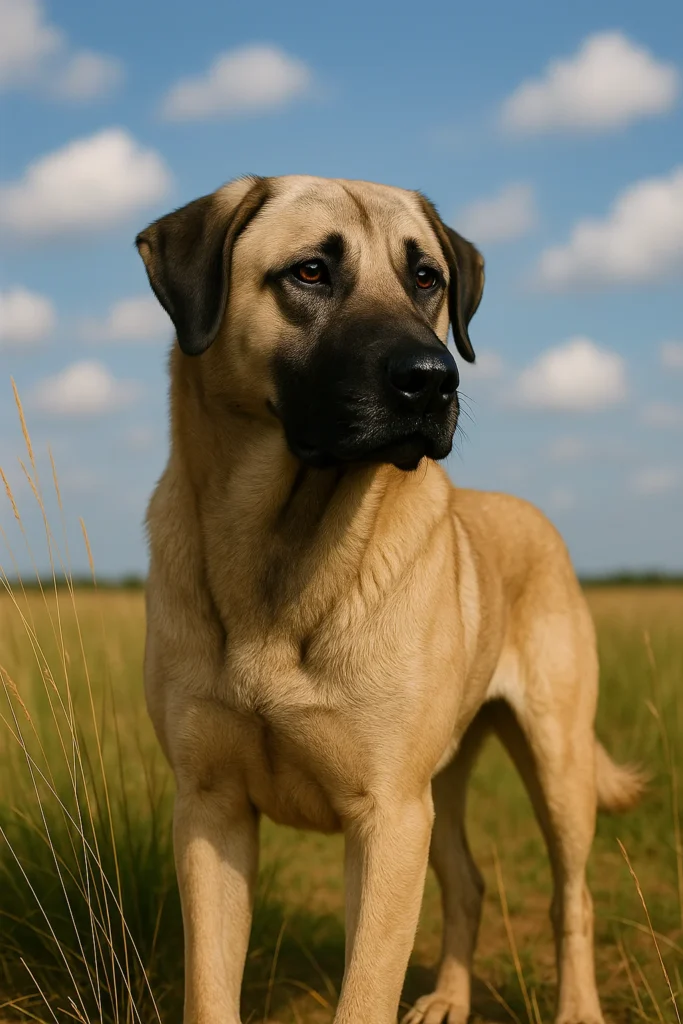
These stupendous dogs are a combination of wide and heavyish heads and have quite a few rectangular protrusions to their muzzles while their small deep-set eyes can be anything from golden to brown in color.
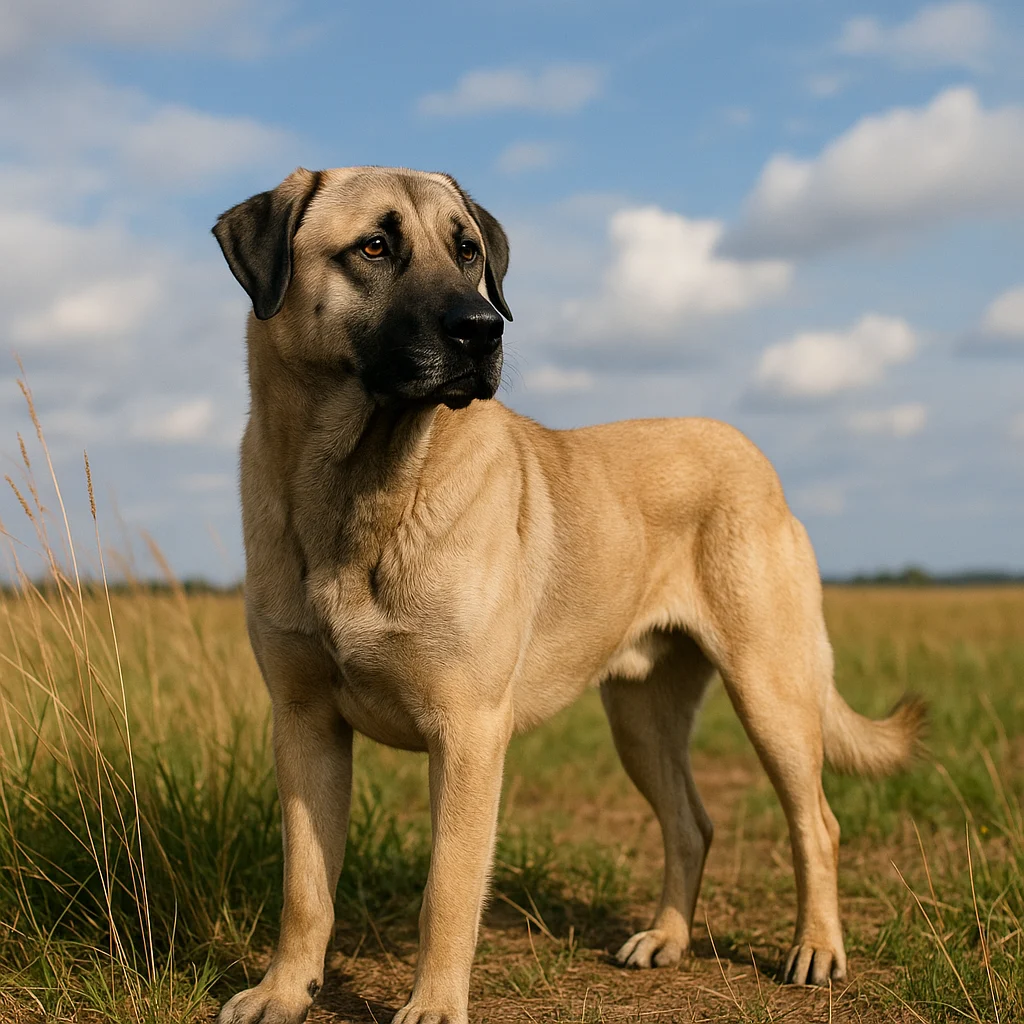
Their two-layered coat consists of short to medium length hair with the more densely covered areas being the neck, shoulders, and tail.
Generally, the heads of rams are broader than those of ewes, thus signaling a more potent masculine nature.
The breed’s sculpted body is the right combination of strength, and surprising agility, therefore, their top speed is 35 mph if they so desire.
Temperament and Personality
The Anatolian Shepherd displays a multifaceted character that involves the trait of being extremely independent yet a very loyal family member.
By nature, these protective dogs are usually tranquil and display self-assurance, but they are always on their guard.
Their independence limits them to one or two thoughts at a time and they will need a trainer to guide them in the right direction generally because they were bred to act as slaves guards making their own decisions.
Socializing with new people and experiencing new situations are the main ways of teaching the dog how to react in such circumstances.
As loving as they can be to their families, these dogs are not the type to demonstrate an abundance of affection, rather, they show it by being on the guard and thus giving protection.
Health
Typically, Anatolian Shepherds are in good health, which is characteristic of the working breeds, and their lifespan is 11-13 years.
Nevertheless, the canine will still have to endure hip and elbow dysplasia that can cause death among humans, so it is imperative to do the appropriate screening and maintain a healthy weight.
Their long thorax makes them vulnerable to bloat (gastric dilatation-volvulus), a severe condition that, if symptoms appear, requires giving the shortest possible time for the veterinary treatment.
The responsible breeders perform the necessary tests for the developmental disorders and eye diseases in order to assure the health of future generations.
Moreover, visits to the vet on a regular basis and having the pet under weight control is the only way to stop the progression of the disease at an early stage.
Grooming
Anatolian Shepherd’s double coat is a quite a handful and its maintenance accompanies the change of seasons as well as the general health of the skin.
Brushing with slicker brushes and medium-toothed combs on a weekly basis not only removes the loose undercoat but also stops the matting of the fur that is caused by the friction between the skin and the hair, which is a problem around the ears and legs especially.
When shedding occurs during spring and fall, it is usually recommended that brushing should be done on a daily basis to control the shedding of the hair.
Bathing every 8-12 weeks with the use of gentle dog shampoos that should be there for the natural coat’s oil is the right way to go.
Their coat, which is resistant to weather, should never be shaved, as it is the one offering temperature regulation throughout the year.
Exercise Requirements
With the exception of short naps throughout the day, these athletic dogs are up for their daily dose of rigorous exercise that normally lasts for 1.5-2 hours.
They can be exercised through long walks, running, and highly supervised play sessions in a securely fencing area which not only meets their exercise requirements but also keeps away from bad behavior that boredom might cause.
Their smart brains can be consumed with training exercises or puzzle toys which will work as their mental stimulation.
Adult dogs that are taken for walks can be absolved through activities that instigate their natural instinct of protecting, however, the exercise for pups should be very gentle and done for no more than 18 months to safeguard their joints during the growing period.
PMID Their independent character grants them the enjoyment of watching and walking around their territory while having respect for their privacy.
Training
The training of an Anatolian Shepherd consists of the use of patience, consistency, and the skills of an experienced handler due to their independence and decided strong nature.
The use of positive reinforcement is the most effective, and the use of treats and praise for the desired behaviors will surely help to set forth the leadership.
Socialization from an early age with different people, animals, and places will help the dog grow proper social reactions.
Basic training for obedience should be started when it is still a puppy, and the 10-15 minute sessions should be kept short to keep the attention span.
These clever dogs do their best at finding the solutions of the problems but still, they may try to wrest control from the master; thus, a strong-willed, unchanging guidance is necessary.
The whole life span of the dog should be accompanied by strong and consistent guidance.
Nutrition
Good nutrition is very important as it is the main reason the Anatolian Shepherd’s large body and lively lifestyle are maintained.
Feeding with good quality dog food specially made for large breeds supports the controlled growth and the proper development of the joints, especially in the early stages of puppyhood.
As for feeding times it should be divided into multiple smaller meals rather than one big portion, so as to decrease the chances of bloat.
Weight control is still very important, as a heavy dog will not only suffer from joint problems but he will also have a shorter life-span.
Pet owners should seek the advice of veterinarians over dietetic matters that are peculiar to the breed depending on their age, activity level, and health status.
Suitability for Families and Living Situations
Anatolian Shepherds can be wonderful family pets if the dog owners are experienced and the dwelling is suitable.
Generally, dogs get along great with kids if they have been grown up together and thus the dog is the least likely to pose any harm to the children.
They are still large in size and the fact that they are protective means that small children should not be left unsupervised.
They are not for apartment living since they require a large and securely fenced-off area where they can walk along the borders and get their daily walks.
Country or suburban housing with a big backyard is the best place to live if you want to get rid of their territorial behavior and they can also get some exercise.
By no means first-time dog owners should try their luck with this breed as they are difficult to train and have strong dominating personalities.
Notable Facts and Fun Facts
The Anatolian Shepherd ancestry is filled with myths and that is the reason why their line can be traced back from numerous artifacts dated 2000 B.C.
plus the Bible gives similar references in the Book of Job where the most ancient dogs of the world might have been the ones raised in Turkey.
Those amazing dogs have even been entrusted with their lives to save the cheetahs that are threatened in Africa, for instance in Namibia, and the result has been a great drop in the conflict between predators and farmers.
For a long time, actually from the past until the middle of the 20th century, the Turkish authorities restricted the export of these dogs to other countries as they felt highly that they are the peak of the national resources.
In the late 1930s, it was a secret Department of Agriculture project that first brought them to the United States.
Although their names are indicative of herding traits, Anatolian Shepherds do not willingly herd.
They are the guardians of the livestock and it is for that reason why they have been placed in the Working Group category of the AKC.
The present-day Anatolian Shepherds are still the ones who perform the task of their forefathers that has remained unchanged for thousands of years in Turkey.