
This rugged little hunting breed was a favorite of Austrian royalty for its incredible scent-tracking abilities and weather-resistant nature.
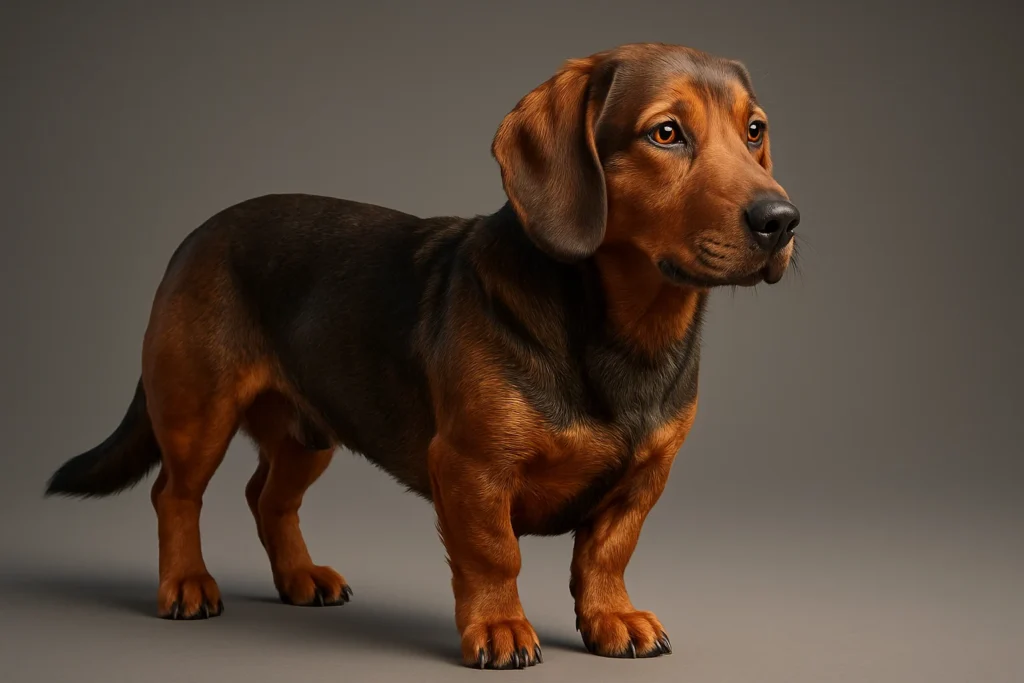
The Alpine Dachsbracke has rectangular legs, a long torso, and a thick coat that fits the alpine climate.
Their good, clever nature will turn them to be perfect family dogs; however, their strong prey drive may cause problems if they are not properly socialized and trained.
About the Alpine Dachsbracke
The Alpine Dachsbracke is Austria’s one of a kind scent hound, that was originally bred for tracking wounded game in difficult mountain terrain. This brave, short and stocky hunting dog, gives his best tracking abilities to a loyal family companionship, thus he is an excellent choice for active owners who are looking for an intelligent and devoted dog to work with.
Breed Sound
Breed Details
Physical Characteristics
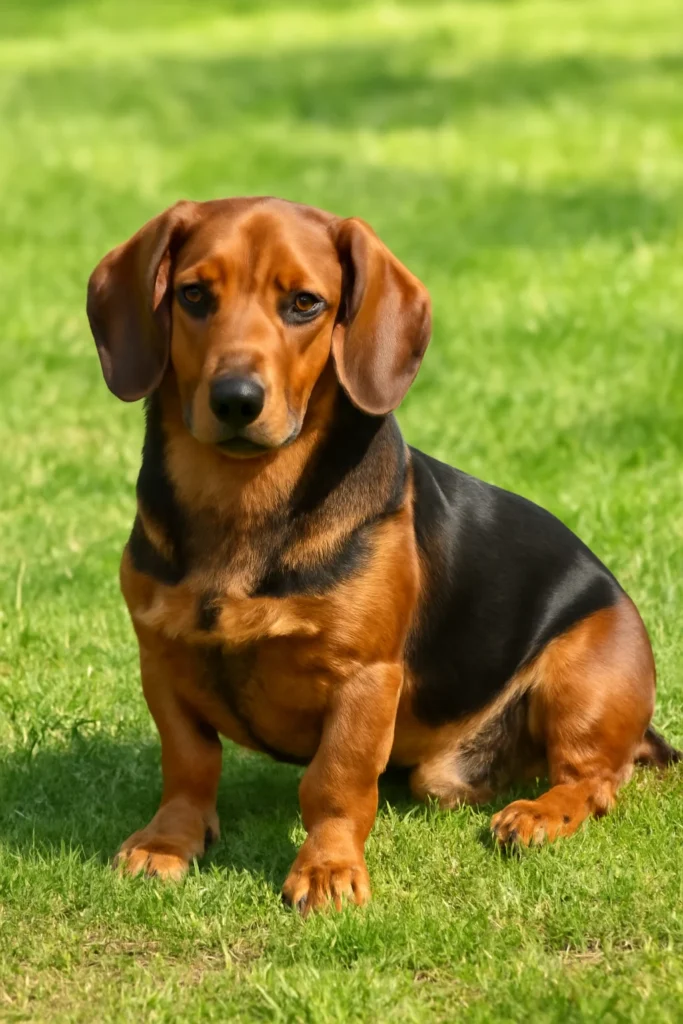
The Alpine Dachsbracke is a dog of the Dachshund type but it is sturdier with the same bone structure but stronger and with longer legs.
These dogs of medium size have muscular, rectangular bodies that are perfect for endurance in the rough terrain.
Their dense double coat consists of a thick topcoat and close-fitting undercoat, providing excellent weather protection.
The breed’s signature features are a slightly arched head with a deep furrow, wide hanging ears, and short but strong legs that support their elongated body.
Temperament / Personality
Alpine Dachsbrackes have the personalities of a fearless, friendly, and intelligent breed that made them the favorites of the Austrian nobility.
These dogs love their families and are super loyal and affectionate. They are very friendly with kids and other dogs, however, in the beginning, it is important to socialize them.
Their independent hunting heritage makes them a bit stubborn which means that they will have to be trained with gentle but continuous commands.
At home, although their prey drive is strong, they are still with calm and cool characters.
Health
The Alpine Dachsbrackes are generally healthy if proper care is provided. However, face some breed-specific health issues mostly related to their body structure that is elongated.
Hip dysplasia and intervertebral disc disease (IVDD) are the main issues caused by the long body, which are common for generally long-bodied breeds.
Besides that, obesity is a source of significant danger because of their body type, and it can lead to the exacerbation of the back issue.
Due to their ears that hang down, they are more prone to ear infections than other breeds.
Immediate veterinary checkups can be a good way to prevent and detect conditions that are not yet obvious, such as progressive rod-cone degeneration and degenerative myelopathy.
Grooming
Alpine Dachsbracke has a coat that requires a minimal amount of grooming that is very simple and straightforward.
Using a firm bristle brush for a week helps to clear their dense coat of the loose hair and debris that come from the environment.
Their water-repellent coat should be bathed very seldom in order to keep the natural protective qualities.
The regular cleaning of the ears will help to prevent the occurrence of infections, while the trimming of the nails once a month and brushing the teeth once a week complete the taking care routine. During the shedding season, brushing may be necessary even more frequently.
Exercise
These energetic hunting dogs need no less than 30 to 60 minutes of daily exercise to keep their physical and mental health in good condition.
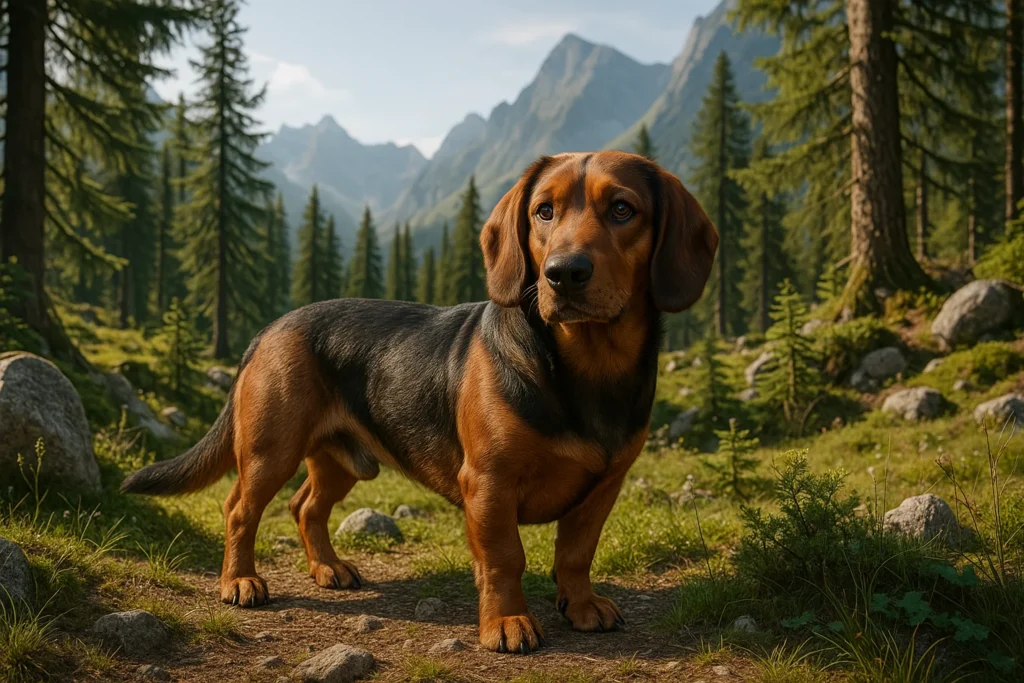
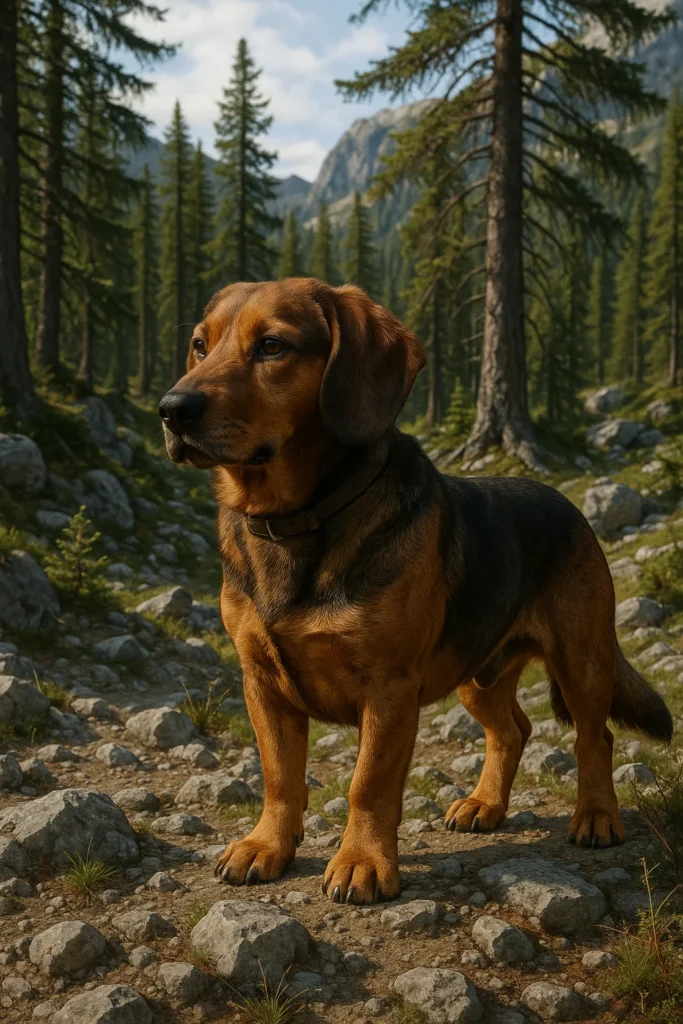
Activities such as long walks, hiking, fetch, and scent work not only meet their energy requirements but also fulfill their natural hunting impulses.
If they do not get the right kind of mental exercise they may develop negative behavior like digging, chewing, or excessive barking.
Their high prey drive indicates a secure fence is very important since they will chase a scent of interest no matter how well they have been trained for recall. Mountain hiking and tracking games especially attract them because of their lineage.
Training
Alpine Dachsbrackes are bright and trainable, however, they can show indignant thinking that is normal for the hunting dogs.
They are mostly affected by unchanging, positive reinforcement tactics rather than corrections that are harsh.
Socialization at the very start is of great importance if one wants to have well-tempered dogs and be able to control the prey drive which will be about the small animals.
Despite the fact that they are able to learn the commands easily, their selective listening and stubbornness necessitate patient and persistent training approaches.
Playing puzzle and scent games are good means of providing them with mental exercise which is a prevention of behavioral problems due to boredom.
Nutrition
Alpine Dachsbrackes in active need of a diet that is rich in protein and of good quality in order to meet their energy requirements and to keep their muscles healthy.
Feeding your Alpine Dachsbracke twice a day is sufficient to maintain steady energy levels and minimize the risk of bloat.
It is very important to watch their weight carefully since they tend to have back problems – even unnoticeable obesity can cause spinal problems.
High-end dry or balanced BARF diets are acceptable; however, wet food only should be avoided so as not to cause dental problems.
Continuously checking helps keep them in fit and good health all their life.
Suitability
Alpine Dachsbrackes are excellent family companions for people who are energetic and can match their exercise needs. The dogs have a gentle temper if they are socialized appropriately. They are usually very peaceful and loving.
However, because of their hunting character, such dogs are not considered good for homes with small animals like rabbits or cats, unless they have been brought up together.
Although they can live comfortably in apartments, it is better if they reside in homes with securely fenced yards where they can go for walks, follow scents, and breathe the fresh air. The rural areas or the suburbs are more suitable for them than the city.
Notable Facts or Fun Facts
In the 1880s, Crown Prince Rudolf of Habsburg was carrying an Alpine Dachsbracke when he went hunting in Egypt and Turkey and the Alpine Dachsbrackes thus became very adaptable.
Those highly specialized scent hounds were jokingly called “cold-nose” as they could follow a scent that was completely cold – a very rare skill even among scent hounds.
Austria officially recognized the Alpine Dachsbracke as the third scenthound breed in 1932. The breed is tiny but unfortunately, it is very keen on tracking the injured wild boar;
however, the smallness of theirs is a big advantage in a fight with the dangerous prey here.
Their original German name “Alpenländische Dachsbracke” therefore most accurately translates to “Alpine Badger Hound”.